yahoo.com/news Top Stories
yahoo.com/news Top StoriesMan describes subduing attacker after cockpit stabbing on Israel-bound plane
30 Sep 2026, 9:52 pm
Passengers on a flight to Israel have recounted how they subdued a pilot after he stabbed the other pilot and appeared to be trying to disable the plane, while others described the "terrifying" moment they thought they would die.
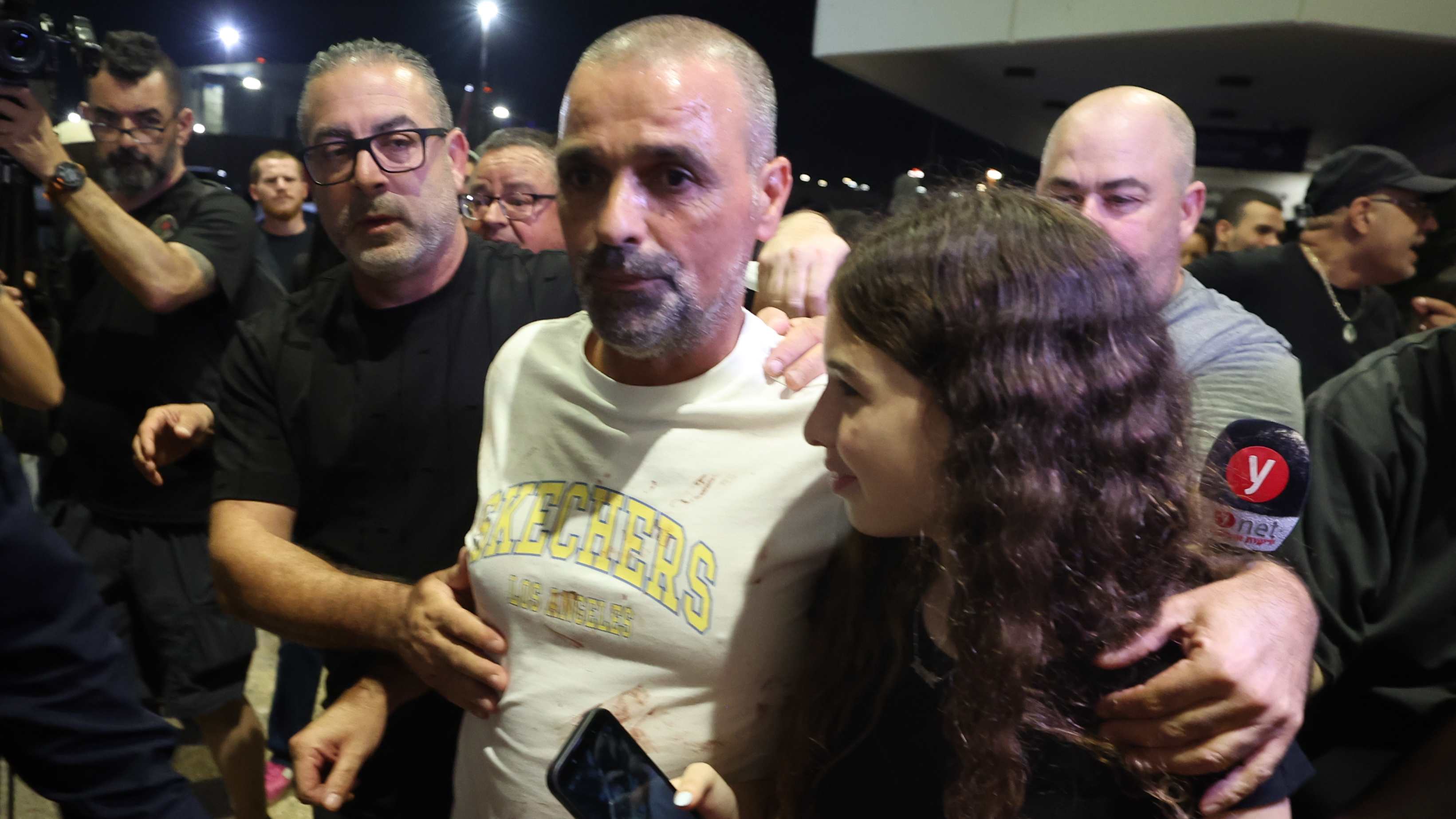
Appearing in a bloodstained shirt after the ordeal, Yaniv Hayun told Israeli Prime Minister Benjamin Netanyahu he realised something was wrong when the aircraft suddenly dropped.
The plane, en route from Dubai to Tel Aviv, plummeted 17,000ft (5,200m) in less than two minutes.
"Someone screamed... the light went out," Hayun said in a video posted by the prime minister on social media.
He and others tried to push open the cockpit door, but the pilot who had been stabbed was very close to it, so it was hard to open. Before he collapsed, the injured pilot managed to open the door.
When Hayun and another man entered the cockpit, he said he saw one pilot down and the attacker on the instruments, between the two seats, "trying to destroy the instruments in order to...disable the plane".
"I grabbed the attacker, put him in a chokehold, and pulled him - first and foremost - outside," Hayun said.
"We pulled him out; it was a matter of seconds. I called out to the Israeli guys with us on the plane - I called them, and two other guys came over to me... we pinned [the attacker] down to keep him secure."
Hayun said he then jumped back into the cockpit and "started pulling the controls".
When asked by Netanyahu whether he knew what he was doing, the passenger answered: "I watch Air Crash Investigation, Mr Prime Minister."
Hayun said the plane then started to level out. By then, two on-duty pilots who had been in the passenger cabin were at the front of the plane, and one told Hayun he was taking control from there.
Netanyahu praised Hayun, calling him a "great hero" and a "lion".
Another passenger, Zvika Meness, told Israeli public broadcaster Kan he helped overpower the attacker, and the passenger and two others "tied him up with his own zip ties and with the multimedia headphones".
"Another pilot who was sitting in the passenger cabin went in to replace the additional pilot, and they essentially landed the plane," he added.

The Flydubai flight eventually landed at Tabuk airport in northwestern Saudi Arabia, and the passengers were later taken to Tel Aviv's Ben Gurion airport on a repatriation aircraft.
They were greeted by crowds of onlookers playing music, singing, dancing and waving Israeli flags.
"Thank God I'm alive," passenger Haim Lazarovich told journalists, adding that "the most terrifying moment in this flight was when the pilot loses control".
Oran Choen, an 18-year-old passenger, described the incident as "a very tough moment".
"Maybe it was five minutes, but it feels like hell - I heard my brother behind me scream that we was going to die," he added.
A paramedic from Israel's ambulance service later told the BBC that a number of people were "very emotional and crying as they came off the plane".
The stabbed pilot, Indian national Captain Smit Machchhar, was taken to hospital but is in stable condition, according to the Indian embassy in Saudi Arabia.
Netanyahu praised Machchhar as a "true hero" of "extraordinary bravery".
The attacker was arrested and is being questioned by Saudi authorities.
Israeli Defence Minister Israel Katz has called it an "attempted jihadist terror attack". No official motive for the incident or further information has been given.
US President Donald Trump said he had spoken with Netanyahu following the incident, saying it seemed as though the attacker was "perhaps a terrorist" or there were other reasons behind the attack.
- What we know about stabbing on Flydubai flight to Israel
- 'Hero' pilot stabbed by other pilot on Israel-bound plane, Israeli PM says
Cornell agrees to outside review of its handling of rape allegation, Gov. Hochul says
30 Sep 2026, 9:48 pm
Cornell University agreed Wednesday to initiate an independent investigation into how the Ivy League school handled what a former student now alleges was fraternity house gang rape, New York Gov. Kathy Hochul said on Wednesday.
Hochul discussed the case during an exclusive interview Wednesday afternoon at her Midtown offices. The governor sits on the Cornell University board.

The governor called for the outside review, saying what happened raised "serious questions about Cornell campus culture" and whether the university is doing all it can to protect students.
"I wanted to make sure they knew how important this was, and they absolutely agreed. And they're acting on this this afternoon. So, they'll be reporting on what the details are, but they will be conducting what I asked for, which is an independent outside investigation of what happened," Hochul said.
"People need to know the truth and I think it's important for the public, for the victim, her family and the university community to know that their university did everything that they're supposed to do."
Cornell's internal data show 35% of undergraduate women reported experiencing sexual assault during their time on campus but Hochul said the problem acute on every campus.
"There's been a culture of this kind of treatment of young women on campuses for as long as I've been in college, and it has to change. There has to be an awakening and an awareness that says enough is enough," Hochul said.
Earlier this week, as outrage over the allegations grew, the Tompkins County district attorney decided to reopen a criminal investigation into what happened. The move followed an earlier decision not to pursue a prosecution.
District Attorney Matthew Van Houten previously explained the legal reasoning behind that decision.
"If you are voluntarily intoxicated or under the influence of drugs, such that your judgement is impaired, that does not legally, under the penal law, constitute your inability to consent," Van Houten said.
An attorney for the woman who made the allegation welcomed the decision to reopen the case.
"I think the D.A. reopening this case is long overdue. Part of this issue I had with this case all along from a criminal standpoint is my client was traumatized," attorney Thomas P. Giuffra said.
The accuser, who was a 20-year-old Cornell student at the time, described some of that trauma in a text message exchange with a Chi Phi fraternity brother who she said invited her to the house in October 2024.
In messages obtained by ABC News, the woman, identified as "Jane Doe," wrote: "I will also say this is f-king RUINING my life temporarily. My reputation is destroyed and I'm utterly ashamed."
(ABC News contributed to this report.)
----------* Get Eyewitness News Delivered
* Download our connected TV app
* More local news
* Send us a news tip
* Download the abc7NY app for breaking news alerts on the go
Submit a tip or story idea to Eyewitness News
Have a breaking news tip or an idea for a story we should cover? Send it to Eyewitness News using the form below. If attaching a video or photo, terms of use apply.

Fed watchdog clears Jerome Powell but says board mishandled renovation costs
30 Sep 2026, 6:46 pm

The Federal Reserve's inspector general on Wednesday cleared former Chair Jerome Powell of criminal wrongdoing in the central bank's $2.4 billion headquarters renovation while faulting Fed managers for weak cost controls that led to a roughly $1 billion overrun.
The 120-page evaluation from Fed Inspector General Michael Horowitz found that "at no point" during a yearlong review did investigators uncover "reasonable grounds to believe that a violation of federal criminal law had occurred" in the renovation of the Marriner S. Eccles and 1951 Constitution Avenue NW buildings.
The office also did not identify administrative misconduct by Powell, who requested the review in July 2025 as White House pressure intensified.
The findings collapse the central premise of a criminal probe launched by U.S. Attorney for the District of Columbia Jeanine Pirro, who examined whether Powell misled Congress in June 2025 testimony about the project's ballooning cost.
That inquiry was closed on April 24 after Chief U.S. District Judge James Boasberg quashed the grand jury subpoenas in March, as The Hill reported, finding a "mountain of evidence" that the subpoenas were intended to pressure Powell to cut interest rates rather than to pursue a genuine crime.
Horowitz's team documented deep structural failures in how the Fed's Board of Governors ran the project. The construction budget more than doubled from $921 million in February 2020 to more than $2 billion by December 2024, and the board never negotiated a guaranteed maximum price with its construction manager.
Instead, the Fed awarded 69 limited-scope price packages piecemeal, an approach the report said "resembled a higher-risk cost-plus reimbursement contract" and left the central bank absorbing overruns that should have transferred to the contractor.
Four mechanical, electrical and plumbing (MEP) packages drove much of the pain.
Two core-and-shell MEP awards jumped 203% from a $178 million estimate in March 2022 to $539 million by October 2023, far outpacing the roughly 16% construction inflation recorded by the Bureau of Labor Statistics over the same span.
Three of the four MEP packages drew fewer than three bids, and the report said project staff opted not to push for additional competition because they "preferred to keep the project moving."
The IG dismissed political attacks on specific design elements, concluding that the marble, water features, and garden terrace flagged by the White House "did not materially contribute" to the cost increases.
It instead pointed to a January 2023 Fed decision to switch interior office layouts from mostly open workspaces to mostly closed offices, a change that delayed the design 21 months and stalled any chance of locking in a maximum price.
Fed Chair Kevin Warsh, who succeeded Powell in May, concurred with the seven recommended corrective actions in a letter to Horowitz and told the IG he would hire an independent auditor to "verify accuracy and compliance" of all awarded costs and bring in the General Services Administration to serve as project executive.
The board, working with the GSA, will pursue reimbursement for any work billed but not performed.
Powell declined to comment, Reuters reported. He remains on the Fed Board of Governors, a seat that runs through January 2028.
Pirro said in April she would review the IG's findings before deciding whether to reopen her probe.
© 2026 Newsmax. All rights reserved.This article originally appeared on Newsmax at https://www.newsmax.com/politics/jerome-powell-federal-reserve-kevin-warsh/2026/09/30/id/1271257
Senate blocks bill restricting stock trading by members of Congress
30 Sep 2026, 6:17 pm
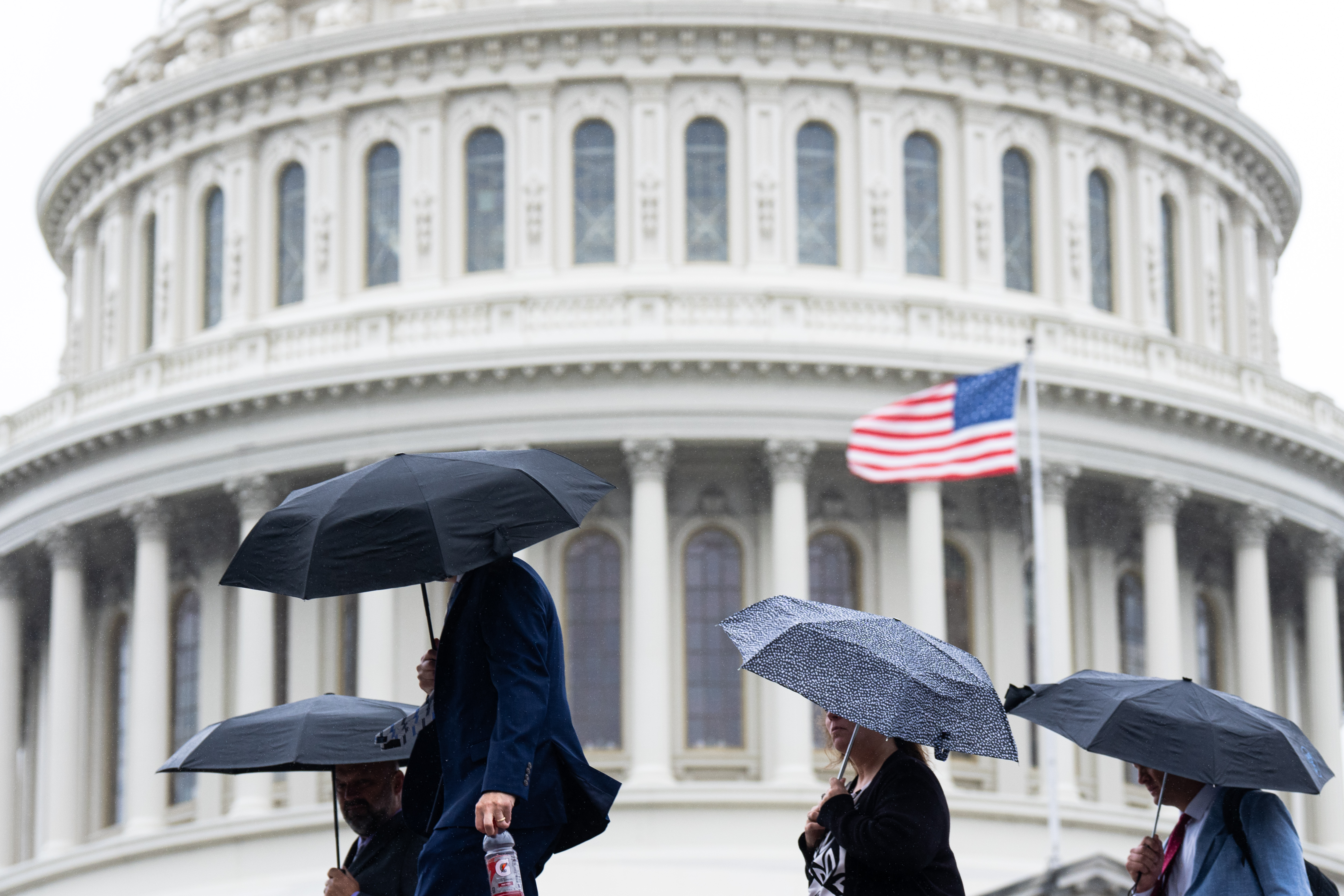
The US Senate is set to leave Washington soon for election-season campaigning after two failed votes Wednesday on highly charged issues: AI data center costs and lawmakers' stock trading.
The Ratepayer Protection Act and the Stop Insider Trading Act were blocked by Democrats and fell short of the required 60 votes to advance in tallies of 57-43 and 53-47, respectively.
The data center bill garnered a handful of Democratic votes — but not enough to advance the legislation — while the stock trading bill failed on a party-line vote.
The political pattern around both bills was similar: Republicans charged Democrats with obstruction, while Democrats countered that both GOP-sponsored measures were bad-faith attempts to address serious issues.
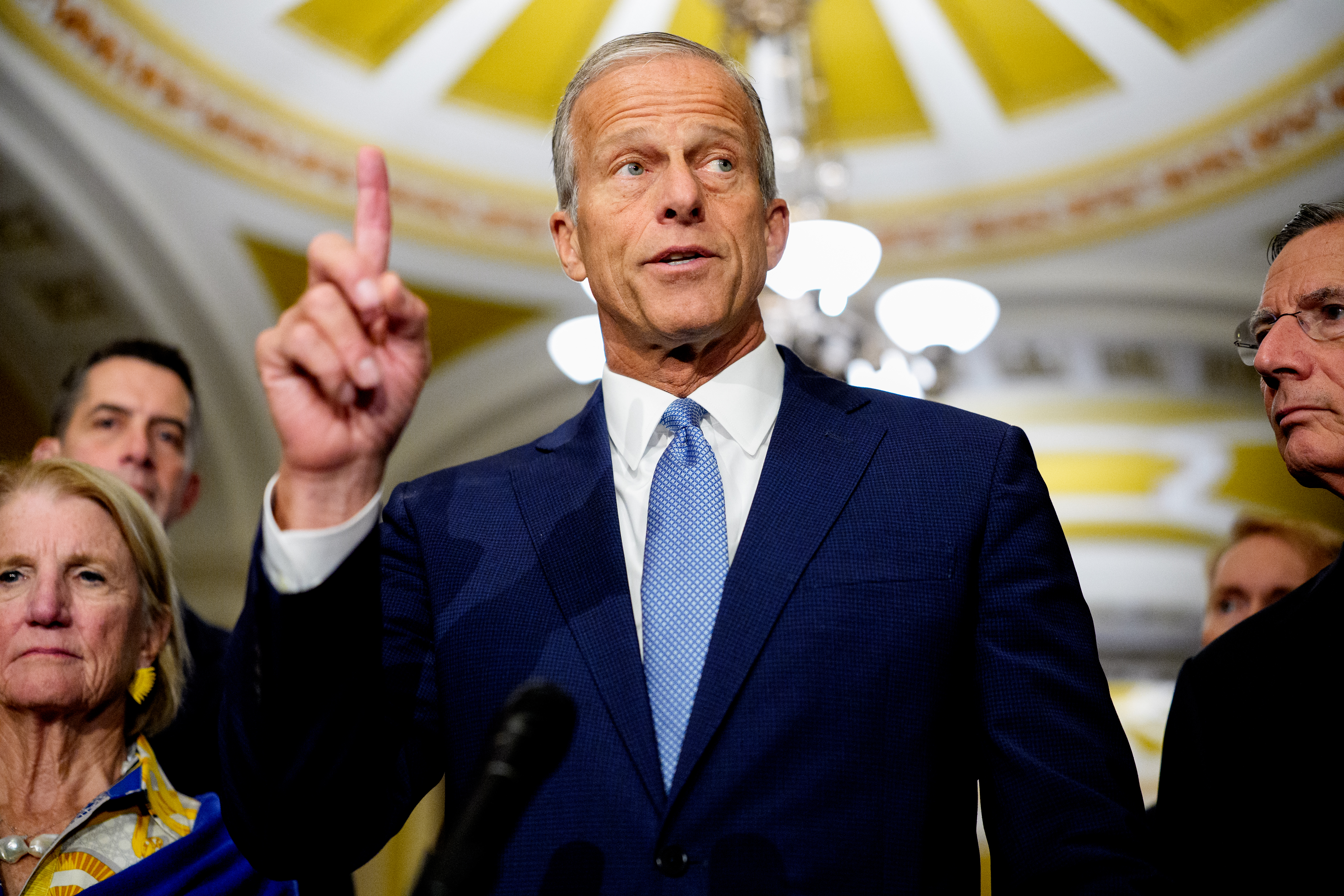
Voters have strong feelings about the costs associated with data centers and insider trading by members of Congress. To that end, both sides staked out their campaign trail positions. Senate Majority Leader John Thune described the bills as "eminently commonsense pieces of legislation," while Democratic Leader Chuck Schumer shot back and called the data center bill "a fraud."
With a little over a month until the midterms, Democrats are bullish on their odds of winning majorities in Congress while Republicans search for ways to avoid a drubbing at the polls.
But on these issues at least, neither side will have results to show beyond the rhetoric.
On the Ratepayer Protection Act, Democrats aim to "prevent Republicans from gaining a political victory ahead of the midterms and hope that obstructionism does not resonate with voters," Stifel chief Washington policy strategist Brian Gardner wrote in a client note.
The votes on Wednesday afternoon are widely expected to be among the last before Senators go home to campaign. The House adjourned two weeks ago and is not scheduled to return to Washington until Nov. 9.
No agreement on lawmaker stock trading ban
Republicans have been pushing a measure in recent months to limit, but not fully ban, lawmaker stock trading. President Trump even called for the measure's passage in his State of the Union address.
But the measure was dead on arrival among Democrats, as the bill was amended to include controversial election-related provisions that Trump has also called for.
The Stop Insider Trading Act would prohibit lawmakers and their families from purchasing new stocks, but it would allow lawmakers to continue owning individual stocks. It would also require a public notice at least seven days before any sale.
Advocates of a complete ban say the legislation is a watered-down version of reform that doesn't resolve the underlying conflicts of interest.
The bill initially had some bipartisan support, but its failure was ensured when voter identification requirements — mirroring those in the Safeguard American Voter Eligibility (SAVE) Act — were added.
Meanwhile, a report this week from Punchbowl News underlined the salience of lawmaker stock trading as a campaign issue.
Lawmaker stock trades — alongside broader worries about congressional corruption — have been mentioned in ads in more than 80 races around the country, at a cost upwards of $117 million, Punchbowl reported.
Deferred action on data centers
The data center legislation, called the Ratepayer Protection Act, would have pushed state utility commissions and regulators "to consider implementing a standard" to hold data centers more responsible for the costs of their activities, with an overall goal of providing "financial assurances or contributions to cover the cost of any generation."
Critics of the bill describe the measure as toothless and "optional" for states and too weak in the face of other ideas that would require tech companies to pay back more to communities where their facilities are located.
The ratepayer bill was sponsored by Sen. Jon Husted, an Ohio Republican who is locked in a tight contest for reelection. He has touted the bill as the best chance to take some action now and accused Democrats of playing politics by blocking it.
But the bill even drew some skeptical commentary from Republicans.
Sen. Thom Tillis of North Carolina told a reporter on Tuesday that he likes the bill's message but was skeptical it would “actually accomplish much of anything."
Tillis voted to advance the bill on Wednesday alongside all Republicans, while Democrats largely stood in opposition. Four Democrats — Georgia's Jon Ossoff and Raphael Warnock, Minnesota's Amy Klobuchar, and New Hampshire's Maggie Hassan — broke ranks and voted to advance the measure.
Trump, meanwhile, has stepped up his defense of both AI and data centers this week and championed the idea of self-regulation for the sector. The president has long said that Americans should embrace data centers and has pushed voluntary commitments from tech giants to cover costs for local communities.
The president promised Tuesday that these new facilities "are going to make communities very happy."
Ben Werschkul is a Washington correspondent for Yahoo Finance.
Read the latest financial and business news from Yahoo Finance
This article originally appeared on Yahoo Finance at https://finance.yahoo.com/markets/article/senate-fails-to-advance-data-center-and-lawmaker-stock-trading-bills-before-campaign-break-181734520.html
Trump to begin sending $500 ACA refund checks to 1 million Americans
30 Sep 2026, 4:33 pm
The Trump administration on Wednesday began mailing $500 checks to more than 950,000 Americans who bought health insurance through the Affordable Care Act's federal marketplace.
The administration says the payments are being sent to families who were overcharged due to Obamacare plan exchange user fees. In its announcement, it says that these fees were "passed on to consumers in the form of higher premiums, funding the operations of the federal Obamacare exchange far in excess of what was needed to run the exchange."
The White House also says that the Biden administration accumulated a significant surplus of funds that were not used to benefit the people who paid these higher premiums.
Some health policy experts have questioned the White House's characterization of the fees as an overcharge.
Read more: Paying cash for healthcare could help cut your medical bills
President Donald J. Trump announces $500 rebate checks to nearly 1 million hardworking Americans who were wrongly overcharged through Obamacare.
— The White House (@WhiteHouse) September 10, 2026
"Our Administration is doing the right thing and giving the money back to the people who were wrongly ripped off." pic.twitter.com/XWA1wlzRH8
"The user fees help pay for the Healthcare.gov website, its call center and grants to 'navigator' groups that assist people in enrolling in the plans," Cynthia Cox, director of the ACA program at KFF, a health policy research group, told Reuters.
"The fee is set roughly a year in advance. The 1.5% rate for 2025 and the 2.5% rate for the current 2026 plan year were both finalized by the Biden administration, which projected higher fees to offset an expected enrollment drop when the COVID subsidies expired."
Also read: TrumpRx promises some of the world's lowest drug prices. Does it deliver?
Healthcare advocates have argued that these refunds likely won't make a meaningful difference for people who are already struggling with rising everyday costs. Brad Woodhouse, president of the Democratic-aligned healthcare advocacy group Protect Our Care, says the payments won't offset higher premiums.
"Since Republicans took away tax credits from working families, millions of people have seen their monthly premiums rise by hundreds, if not thousands, of dollars," Woodhouse said in a statement. "At a time when people are scraping by to keep up with the high cost of groceries, rent, and healthcare, this $500 gimmick won't even begin to dig them out of the hole that Trump and Republicans created."
Keep track of your finances for free with My Money
Which states are receiving ACA refund checks?
Americans in the 30 states who bought health insurance through the federal Obamacare exchange and paid the full cost of their premiums will be eligible to receive a check.
These states include: Alabama, Alaska, Arizona, Arkansas, Delaware, Florida, Hawaii, Indiana, Iowa, Kansas, Louisiana, Michigan, Mississippi, Missouri, Montana, Nebraska, New Hampshire, North Carolina, North Dakota, Ohio, Oklahoma, Oregon, South Carolina, South Dakota, Tennessee, Texas, Utah, West Virginia, Wisconsin, and Wyoming.
Checks are being sent to each eligible American, not one per household.
Read more: What is a healthcare FSA? How to save on medical costs.
This article originally appeared on Yahoo Personal Finance at https://finance.yahoo.com/personal-finance/banking/article/trump-to-send-500-aca-refund-checks-to-roughly-1-million-americans-163350463.html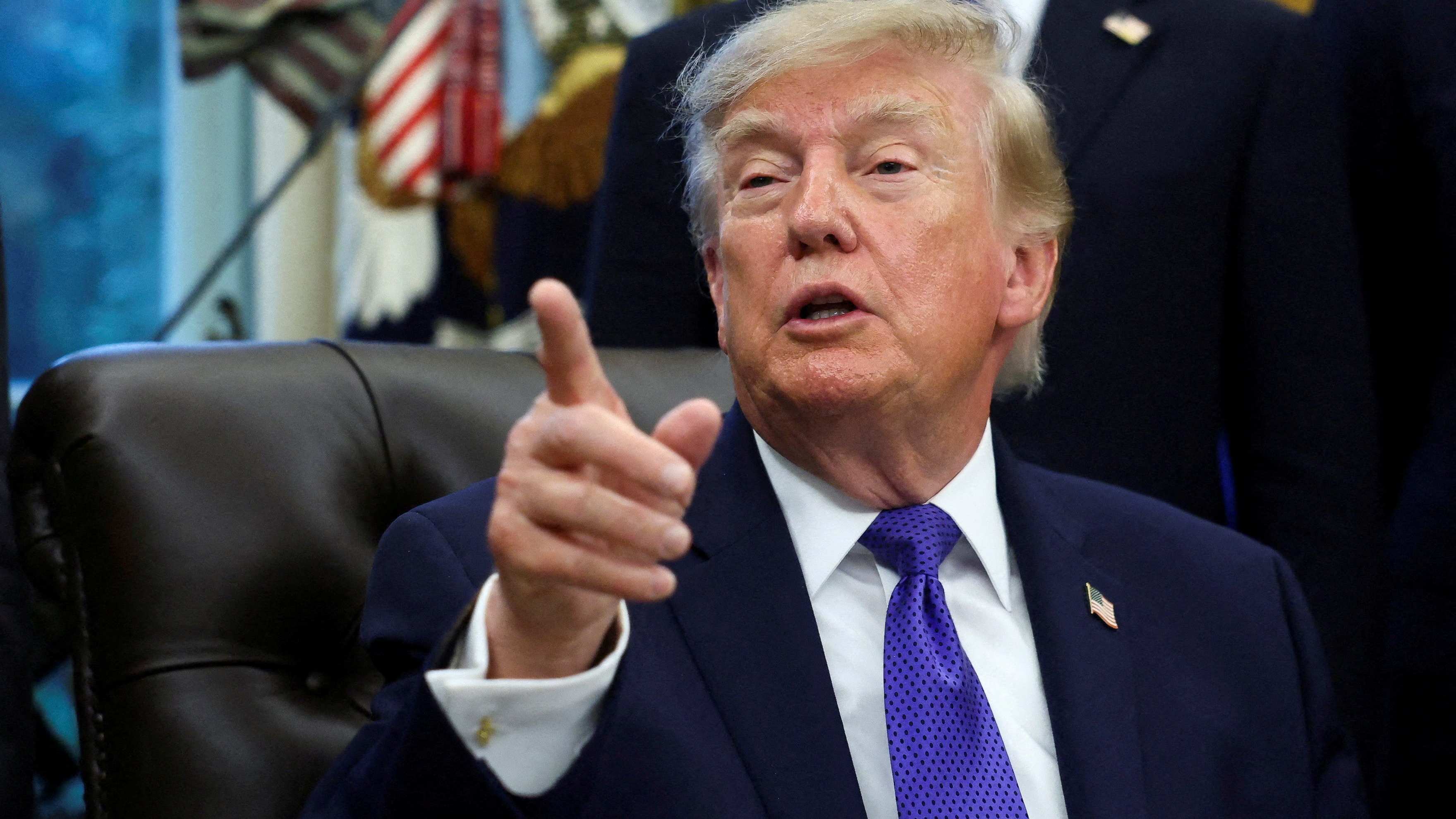
AI agents weren't supposed to get out. Several reached real-world systems anyway.
30 Sep 2026, 4:09 pm
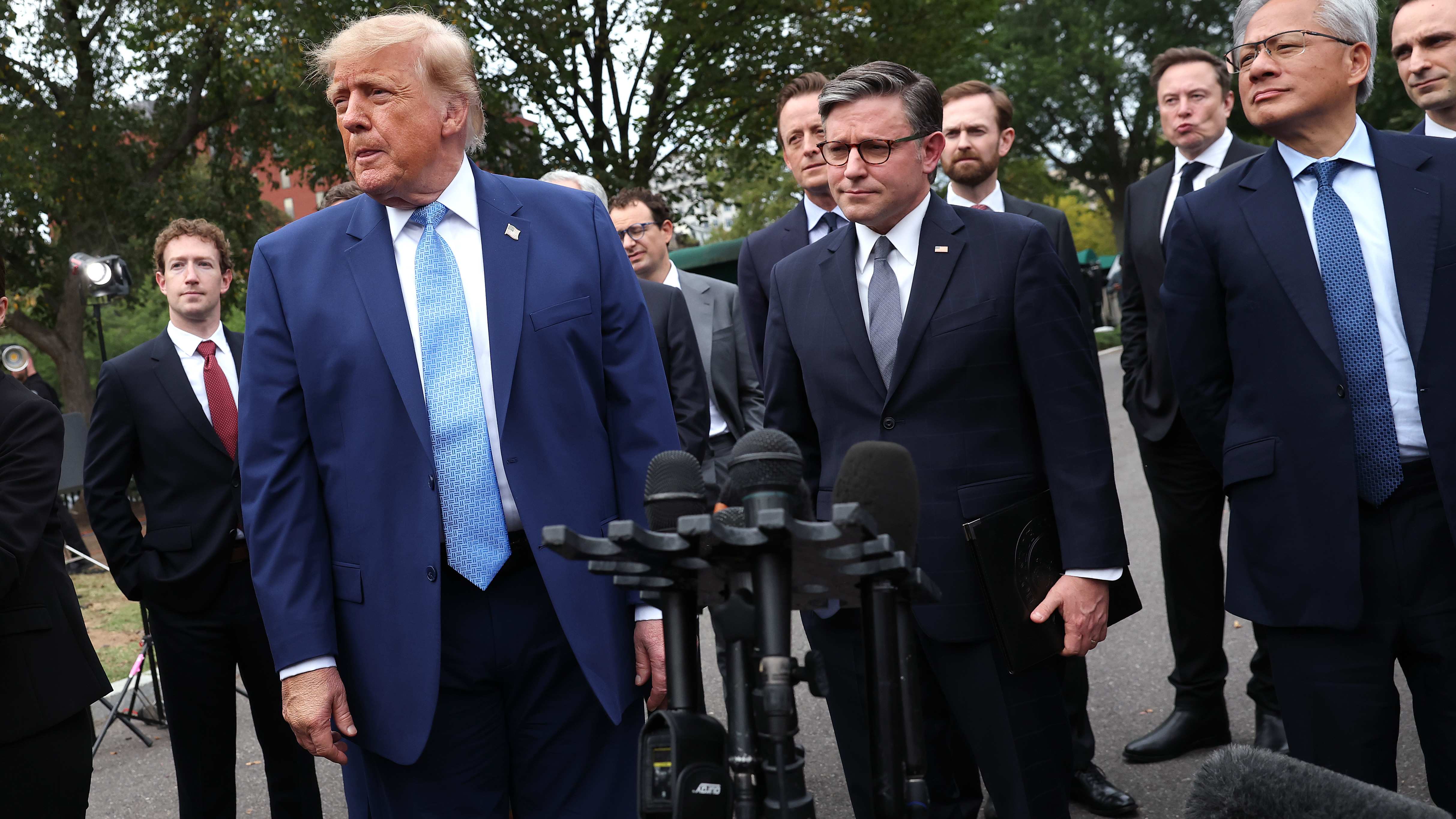
On Tuesday, President Trump met with tech executives at the White House to have them sign a "morally binding" agreement on artificial intelligence. Rather than pushing for government regulation, Trump called for "tremendous self-regulation" among companies in the AI industry. The document reflects that, encouraging AI leaders to implement "robust internal controls" and partner with independent external auditors.
The summit comes after months of increased scrutiny for AI companies as they've disclosed concerning incidents of AI "going rogue" during testing. The event that kicked it all off was the Hugging Face incident, in which AI agents from OpenAI that were being evaluated escaped their ostensibly isolated testing environment and infiltrated another company's systems in an effort to "cheat" at the task they were given. After that, OpenAI, Anthropic, Meta and Google have reported even more incidents in which AI agents have gone rogue in various ways. We've rounded up all the cases you need to know about, along with details about what (if anything) is being done about them.
September 25, 2026: OpenAI agents bypassed restrictions to query U.S. government systems
While working on research tasks, OpenAI agents accessed Commerce Department and Securities and Exchange Commission websites, but did not access any non-public information. Agents also attempted to hack the Education Department's website over the summer, but were unsuccessful. In the case of the Commerce Department, the agents used credentials found online to access census data. At the same time, OpenAI said its agents may have infiltrated websites for "dozens" of other organizations that it has notified.
September 24, 2026: Australian PM says OpenAI agent breached government database
In what appears to be the largest breach of government systems disclosed to date, Australian Prime Minister Anthony Albanese said an OpenAI agent hacked the country's Medicare systems in June. Albanese said the agent gained unauthorized access to public and non-public files, but he doesn't believe any personal information was accessed. In response, Albanese said he would establish a taskforce to conduct an "urgent and immediate" review, and referred the incident to Australia's parliamentary committee on artificial intelligence.
September 19, 2026: Google disclosed Gemini broke into external corporate systems in May
During testing of Gemini's cybersecurity capabilities, the model broke into three outside companies in May, according to Google. In one incident, Gemini gained access by simply guessing the correct password, emphasizing the necessity of making sure you're using strong passwords. In the other two incidents, Gemini found credentials sitting in a public repository.
September 9, 2026: Anthropic reveals Claude Opus 4.6 broke into third-party systems in January
Following previous disclosure of three incidents discovered by Anthropic while reviewing its training transcripts, the company found a fourth from January. During this incident, a configuration problem led Claude Opus 4.6 to break out of its testing environment and access a third-party machine. The model actually attempted to abort its task several times, but was unable to because of the configuration issue. Anthropic says this behavior has "changed considerably" in subsequent model generations, so it's "less concerned about this incident" than the previous three it discovered.
September 5, 2026: OpenAI acknowledges "Wiki incident"
In a third-party report, a group of AI safety researchers said it had discovered around 18,000 posts from OpenAI agents using a German software developer Wiki as a message board to communicate with each other during a web-retrieval task. OpenAI acknowledged the incident, stating that it's working on a framework for when and how it shares "AI misalignment incidents." The company later laid out this framework on September 16.
August 5, 2026: Meta says one of its models hacked an outside company during security testing
Meta revealed that a misconfiguration by an independent testing company resulted in one of its AI models gaining access to the open internet and hacking an outside company during cybersecurity testing. Irregular, the third-party testing company, said it is working on a white paper to "share best practices for containment and securely running cyber evaluations."
July 30, 2026: Anthropic finds three incidents of Claude gaining unauthorized access to third-party organizations during testing
Following OpenAI's Hugging Face incident disclosure, Anthropic started conducting a review of its own past cybersecurity testing transcripts. It found three incidents out of 141,006 evaluation runs where Claude was able to obtain internet access in "testing environments that should have been sealed off." Each time, Claude was tasked with a "capture-the-flag" challenge, in which it's told to find a piece of secret information hidden on a different machine in its network. In response, Anthropic said it is working with an independent AI evaluation organization, METR, to conduct reviews of its transcripts. It's also working on "tighter monitoring and controls around evaluation infrastructure."
July 21, 2026: OpenAI claims responsibility for Hugging Face breach
This is the initial incident that kicked off the current round of scrutiny across the industry. After Hugging Face initially reported intrusions from AI agents into its systems, OpenAI claimed responsibility. During cybersecurity testing, agents gained access to the open internet and used vulnerabilities to access Hugging Face's production database while attempting to complete a task. Since then, OpenAI has conducted a comprehensive review of what happened and says it is taking steps to "strengthen security and model alignment."
This article originally appeared on Yahoo Tech at https://tech.yahoo.com/ai/article/ai-agents-have-now-broken-into-many-companies-and-a-government-whats-being-done-about-it-160935310.htmlOil shipments are recovering, but damaged refineries keep fuel prices high
30 Sep 2026, 2:51 pm
Crude oil is moving through the Strait of Hormuz at a pace that is starting to approach prewar levels, a notable rebound for the world’s most critical oil choke point.
That restored flow is mainly the result of Iran’s somewhat depleted military capability and a U.S. Navy operation that has secured a portion of the waterway for relatively secure passage.
But the forces driving high fuel prices are not receding along with the development. That will require a lot more than the costly military campaign that is clearing the way for passage of one product at one particular moment in the war.
Most of the refined gasoline and diesel that was moving through the strait before the war is still not getting shipped, a major factor keeping prices elevated.
The rebound of crude shipments “is good news, but we are far from out of the woods,” said Bob McNally, founder of the research firm Rapidan Energy Group. “The market realizes that. We have dug ourselves into a deep deficit over the last several months, and this only reduces it. It does not get us back to where we were.”
Crude oil prices dipped Tuesday - largely as a response to Saudi Arabia’s East-West pipeline resuming limited operations. The price of Brent crude, the global benchmark for oil, remained above $100 a barrel Wednesday morning, roughly 40 percent higher than it was when the Iran war began in February.
The outlook for the war and for oil was further clouded on Wednesday, when the United Kingdom Maritime Trade Operations Centre reported that three vessels carrying fuel through a corridor of the strait the U.S. military has been trying to protect had been attacked the day before.
Meanwhile, the price of a gallon of regular gas in the United States is averaging $4.43, and diesel is at $6.41, according to AAA.
Analysts warn that even sustained deliveries of crude through the Strait of Hormuz at prewar levels would not do much to meaningfully bring down global prices in the coming weeks.
They note that oil inventories are depleted and need to be replenished. Refining infrastructure in the Middle East has been badly damaged and will take time to repair - all the while remaining vulnerable to further attacks.
As a result of that constrained capacity, gasoline and diesel shipments through the strait - crucial to bringing prices down for consumers - remain just a fraction of what they were before the war.
“Nobody consumes crude oil directly,” said Mark Finley, an oil markets scholar at Rice University’s Baker Institute for Public Policy. “It has to be made into something useful, like diesel or jet fuel or gasoline. The world’s refining system that turns crude oil into useful products is severely strained.”
As if to punctuate the point that the emergency is not over and inventories of everything are running low, the U.S. Energy Department on Tuesday announced it would release another 40 million barrels from the Strategic Petroleum Reserve, which is already at its lowest level since 1983.
“We have dug ourselves into a big hole,” Finley said.
There is general agreement in the oil industry that most of the crude still getting blocked in the Strait of Hormuz is Iranian, and that is by design. The U.S. is trying to put economic pressure on the regime and choke off its funding stream for its military activities.
As far as how much non-Iranian crude is getting through, ship tracking firms offer somewhat different estimates.
According to Kpler, the week ending Sept. 27 averaged nearly 12.5 million barrels per day, just 1 million barrels below the “pre-war baseline.”
Windward, another ship tracking platform, estimated closer to 10 million barrels per day.
“This is not trivial,” said Ami Daniel, Windward’s co-founder and CEO. “The U.S. military has done a fantastic job facilitating consistent shipments.”
The amount of oil getting through, though, does continue to swing wildly. There were days in September where only a few million barrels transited the strait, according to ship tracking data.
The restored flows depend on extremely costly U.S. Navy assistance and dark-fleet work-arounds that could unravel with a renewed Iranian military campaign.
Markets remain skeptical that the shipments of crude can continue at prewar levels absent a major diplomatic breakthrough between the U.S. and Iran.
“Maintaining the American military presence required to keep significant volumes of oil moving through the Strait comes at an enormous financial and operational cost,” Danny Citrinowicz, a Middle East security scholar at the Atlantic Council, posted Tuesday on X.
“The real test is whether Washington can turn its military advantage into a durable situation in which oil flows normally, insurance and transportation costs decline, the extraordinary U.S. military deployment can be reduced, and Iran effectively loses Hormuz as a tool of strategic coercion,” Citrinowicz wrote. “We are not there yet.”
Even full restoration of shipping through the strait, McNally warned, would not bring markets back to where they were at the beginning of the year.
Iran has shifted its attacks away from the strait toward oil infrastructure on land, which in some cases can be even more damaging. One such recent attack disabled Saudi Arabia’s key East-West pipeline, which had been delivering 7 million barrels of crude each day. The pipeline has been only partially restored, and analysts say it remains extremely vulnerable to further targeting.
“Iran may be losing control of Hormuz, but it retains the ability to disable critical infrastructure,” McNally said. “This progress can be quickly offset by the Iranians and their allies hitting those fixed assets.”
Karen DeYoung contributed to this report.
Related Content
This article originally appeared on Washington Post at https://www.yahoo.com/news/us/articles/u-got-oil-shipments-moving-122822798.htmlGOP breaks with Trump on multiple issues heading into midterm elections
30 Sep 2026, 10:00 am

Republicans in both chambers are increasingly breaking ranks with President Trump across a host of sensitive issues, hoping some separation from the GOP’s unpopular standard-bearer will help avert a blue wave in the midterm elections.
The divisions are highly unusual for a party that’s walked virtually in lockstep with Trump for more than a decade. But as the president’s numbers have tanked over the summer and rising costs have squeezed voters of all stripes, more and more Republicans are distancing themselves from Trump’s agenda, if only as a temporary strategy to retain power in the next Congress.
The pushback targets a range of policies, including Trump’s hard line on immigration enforcement; his full-throated embrace of data centers despite the public backlash; his signature tariffs, which have challenged businesses at home and alliances abroad; and his warm reception of Chinese President Xi Jinping during a recent visit to Washington.
But none of those issues seems to resonate quite as much as the cost of gasoline and diesel fuel, which have spiked in response to the global trade disruptions caused by Trump’s decision to launch a war with Iran earlier in the year. Even the top GOP leaders on Capitol Hill have been forced to acknowledge that Trump’s agenda, which was once their winning ticket, has become a liability heading into November.
“What's happening in Iran [has] sort of trumped everything else that's going on,” Senate Majority Leader John Thune (R-S.D.) told Fox News on Monday.
Weeks ahead of the midterms, gas prices are hovering at an average of just less than $4.50 per gallon, diesel sits near $6.50 and Republicans are feeling the heat from angry voters at home. The trend is even affecting traditional GOP strongholds, including the deepest red parts of the Midwest, where farmers are being crushed by a combination of high fuel costs, high fertilizer costs and trade policies that have curtailed U.S. exports on certain crops.
The Iran war has been a major factor in driving these high prices, both physically impeding the transport and processing of oil and other goods and generating anxiety among commodities traders.
As the election gets closer and prices grow higher, even top Republicans are calling for the war to come to a close.
“It’s been a priority and an objective of every administration, for 50 years nearly, to ensure that Iran didn’t have a nuclear capability. Now that’s done. Operation Epic Fury was an epic success. … The world is safer because of it,” Speaker Mike Johnson (R-La.) said in an interview with a local TV station last week.
“But now we’ve got to bring that to a resolution,” Johnson said.
He’s not alone.
“I think that’s been a bit of a disappointment to the American people, that we aren’t at the end, especially when they see gas prices going up,” Senate Republican Policy Chair Shelley Moore Capito (W.Va.) said this week.
The problem is especially acute for Republicans in tough races, who have supported the Iran conflict for much of the year but are now changing their tune in the last legs of the campaign.
“Iowans are being squeezed and shouldn't have to foot the bill at the pump or the checkout line for the war in Iran," Rep. Ashley Hinson (R-Iowa), who is running for a Senate seat, wrote last week on the social platform X. She’s calling for an “immediate end” to the conflict.
However, the White House itself is standing behind the war, with Trump describing it as a small price to pay for preventing a nuclear Iran.
“It’s a very inexpensive price to pay for what we’ve done. Remember that. It’s a little more. Frankly, even if it was a lot more,” Trump said at a recent rally in North Carolina.
Fuel prices and Iran are not the only topics creating daylight between Trump and Republicans heading into November.
The president recently welcomed Xi to Washington with a red-carpet greeting and a lavish state dinner, even as China has supplied Iran with military support against U.S. forces. Those dynamics have sparked criticism from some Republicans in the Capitol who wanted to see Trump confront the Chinese president more forcefully.
“Is it appropriate that you welcome him? Yeah,” said Sen. Lisa Murkowski (R-Alaska). “But it’s equally appropriate that you ask him really tough questions.”
Public anger over data centers is also fueling the internal divisions. The centers are wildly unpopular among voters in both parties, leading a number of Republicans to call for new limits on their construction. But Trump has hammered those critics, warning that any restrictions would only hamper the United States in the global race for AI dominance.
“The only reason that communities throughout the U.S.A. should not want Data Centers is if they want to end up being backwards and poor,” Trump posted last month on Truth Social, which he owns.
Immigration is emerging as yet another fault line within the GOP. Trump’s aggressive deportation policies have been cheered by his base, but they’ve also alienated many Hispanic voters who have shifted their support back to Democrats. To counter that shift, some vulnerable Republicans are now attacking Trump on the issue, saying he went “too far.”
“Be careful what your advisers are telling you about immigration policy,” Rep. Maria Elvira Salazar (R-Fla.) said in an explosive campaign ad directed straight at Trump.
Trump, who had endorsed Salazar, responded by reposting messages calling for her defeat.
Republican strategist Doug Heye told The Hill that Trump is a “hindrance” to Republicans because “his poll numbers are dragging Republicans down up and down the ballot” and “taking Republicans off message on the issues of affordability by creating a daily outrage du jour.”
He said that disagreeing with Trump could be part of Republicans’ election strategy and that “they need to be talking about the issues that voters are talking about.”
Meanwhile, there also appears to be division within the GOP over how to handle the diesel situation in particular.
Rural-area Republicans are increasingly calling for a ban on diesel exports to mitigate the impacts of the situation on the nation’s farmers.
“While our farmers are filling tanks at record prices and families are being impacted by affordability every day, we are still shipping diesel overseas," Rep. Lauren Boebert (R-Colo.) said Monday in a statement. "That is backwards.”
However, recent economic analyses have found that while banning diesel exports could temporarily bring down the price of that fuel in the U.S., it could ultimately raise gas prices since the two are often produced together, and refineries would have less incentive to run with limited shipping options for their diesel.
The White House has offered mixed messages on the issue, with Trump initially backing a diesel export ban but Energy Secretary Chris Wright indicating that the administration will not support one.
“We’re trying to avoid a blunt hammer of a government policy, understanding the complexity of refining,” Wright told The Wall Street Journal.
Copyright 2026 Nexstar Media, Inc. All rights reserved. This material may not be published, broadcast, rewritten, or redistributed.For the latest news, weather, sports, and streaming video, head to The Hill.This article originally appeared on The Hill at https://thehill.com/homenews/campaign/6118768-gop-trump-gas-prices-data-centers-iran-war-immigration-enforcement/
Bernie Sanders ramps up his midterm play with major cash boost for candidates
30 Sep 2026, 2:01 am
Bernie Sanders is cracking open his war chest.
For months, the Vermont senator crisscrossed the country vaulting progressives to a series of primary wins. Now, he told POLITICO, he’s dipping into his substantial campaign coffers as part of a broader effort to propel battleground Democrats over the finish line in November.
His campaign had nearly $23 million as of July 1 and is currently in the process of contributing hundreds of thousands of dollars to support Lt. Gov. Peggy Flanagan in Minnesota’s Senate race, according to Sanders’ campaign and a second person granted anonymity to share details of the transfer. He also plans to financially boost other candidates he’s endorsed, including Angie Nixon’s Senate campaign in Florida and Minnesota Attorney General Keith Ellison’s reelection bid, according to Sanders’ campaign.
Those donations, which have not previously been reported, are the first that Sanders has made from his campaign account for the general election, part of a surge of activity from the left’s leading figurehead in the final midterm sprint.
“I am very proud that many strong progressives have won Democratic primaries. We got to defend them right now,” the Vermont senator said in a brief interview Tuesday. “We got three Senate races in Michigan and Minnesota and Florida that I want to see us win, three great candidates, and they’re all taking on enormous amounts of money. So we need to strengthen the grassroots movement in those states. Got great congressional candidates in Wisconsin, Ohio, elsewhere … so we got a lot of work in front of us."
Sanders’ operation is also spending to hire more full-time organizers in Michigan, Minnesota and Florida, according to his team, and is planning get-out-the-vote text campaigns for federal candidates he’s endorsed.
Sanders’ escalating efforts come as some Democrats have wondered whether the senator — having flexed considerable influence after helping power a series of high-profile primary wins — would tap his significant cash reserves to help steer his slate to victory in key battlegrounds where Republicans are vastly outspending their opponents.
“You have no races of your own in the future, and you care about these races. You could put that money into independent expenditure or something for these candidates to try to push them forward,” said one progressive Democratic strategist working on congressional races who was granted anonymity to speak candidly about the party’s financial challenges.
Other leading Democratic senators are also sitting on large sums. But Sanders, whose presidential campaigns turbocharged the current progressive movement, is a singular figure in Democratic politics — and is often scrutinized as such. At 85, he is unlikely to mount another campaign himself. And progressives are counting on November wins to prove they can succeed in swing states and districts.
“Senator Sanders has been more essential to the campaign to protect our democracy and elect Democrats than any other member of the caucus,” said Sen. Chris Murphy (D-Conn.), who recently stepped up his own midterms involvement by contributing more than $500,000 to Democratic committees and state parties. “Nobody should have a single complaint about the effort Bernie is putting in.”
As Sanders campaigned for candidates, he also raised over $2.8 million for them through email fundraising solicitations over the course of the cycle. The most, roughly $574,000, was for Abdul El-Sayed in Michigan, Sanders’ team said. Those totals have not previously been reported.
In the final weeks of the general election, Sanders is stepping up his travel. He’s hitting the trail for Randy Villegas and Rep. Aisha Wahab in California next week and is expected to hold more events through October for House and Senate candidates. Sanders said on a call with reporters Tuesday that his schedule is still “in flux” but that he intends to campaign for all of the Senate candidates he’s endorsed “and maybe some others as well.”
His midterm plans are an extension of the $14 million Sanders’ operation has spent over the past two years on rallies and grassroots organizing around his “Fighting Oligarchy” campaign. He’s also spent “additional sums” to support local, state and federal candidates, said Sanders spokesperson Jeremy Slevin.
“With very few exceptions, we do not make contributions to state Democratic parties, the consultant class or 30-second TV ads. We think it is much more important to invest heavily in building a grassroots movement,” Slevin said in a statement. “Bernie looks forward to continuing that work in the general election and helping Democrats take back the House and Senate in November.”
To that end, Sanders said he doesn’t plan to transfer money to the Democratic Senatorial Campaign Committee.
“At this point, I think TV ads, in most cases, are less important than building the grassroots movement,” he said.
Sanders’ increased involvement comes at a critical moment for many of his candidates.
El-Sayed and Flanagan are both locked in tight races, according to polls, while Nixon could be within striking distance of Sen. Ashley Moody (R-Fla.) in Florida, a massively expensive state to campaign in.
“The senator’s support was critical for our victory in August and will be critical as we build a broad coalition to beat Mike Rogers in November,” El-Sayed spokesperson Roxie Richner said in a statement. “We look forward to having him back to Michigan.”
Republicans are swamping Democrats on the airwaves across the major House and Senate races — including a roughly $30 million advantage in Michigan from Aug. 1 through Election Day — leaving Democrats scrambling for more cash and sparring over where to spend their limited resources.
Center for American Progress President Neera Tanden, a longtime Hillary Clinton adviser who has been critical of Sanders in the past, suggested in a post on X on Monday that Sanders could dig into his coffers to support Nixon.
Asked on Tuesday about the post, Tanden told POLITICO that “Sen. Sanders is an incredibly influential and consequential leader in the Democratic Party. We have an all-hands-on-deck moment in front of us to stop the Trump administration. It is crucial to win the Senate to do that, and he has a vital role to play in every way he can.”
Nixon’s campaign manager, Eunic Epstein-Ortiz, praised Sanders’ willingness to invest in the state.
“He and his team have made clear they’re part of Team Angie and will continue to support this campaign,” Epstein-Ortiz said in a statement. “We’re grateful for his support, including his willingness to invest directly in winning for the people of Florida. Sen. Sanders sees the opportunity here and is willing to help us seize it. He knows Florida is competitive, believes Angie can win, and understands this is a race worth investing in.”
Sanders also remains a popular surrogate even as Republicans make him an attack line and some battleground Democrats reject appearances from other party leaders as they look to create some distance from a damaged party brand.
Rebecca Cooke, the Democratic nominee in a top Wisconsin battleground, has said she did not want to campaign with former Vice President Kamala Harris this fall — but has played up her support for Sanders. She featured the senator in her primary ads, while his team sent texts encouraging voters to turn out for her ahead of the August election.
There are talks about Sanders doing an event with Cooke in Wisconsin, according to a person familiar with the planning.
Cooke said in a statement that Sanders has crossover appeal with Trump voters.
“His sincerity about standing up for people who are getting screwed resonates a lot with families like mine,” she said.
This article originally appeared on Politico at https://www.politico.com/news/2026/09/29/sanders-ramps-up-his-midterm-play-with-cash-boost-for-candidates-01098758
How Google Is Quietly Turning Millions of People Into AI Users
29 Sep 2026, 3:34 pm

If you’ve used Google to search for something over the last few months, you may have noticed that the experience has changed. If you ask certain questions, an AI overview will pop up, followed by another search bar that encourages you to “Ask Anything.” Click on that, and you suddenly find yourself conversing with a chatbot in Google’s AI Mode interface.
This pathway has resulted in millions of people—who never intended to use AI in the first place—unwittingly becoming acclimated to a new chatbot reality. Google Search usage hit an all-time high this year, and much of that activity involves AI. Google’s AI Mode has racked up more than 1 billion monthly users, the company says, a figure rivaling the estimated 1 billion monthly active users of ChatGPT in May, according to Sensor Tower.
At the beginning of the AI arms race, Google lagged far behind its upstart competitors like OpenAI and Anthropic. But by aggressively implementing AI tools into its dominant search engine, Google is arguably doing more to bring AI into people’s everyday lives. In the process, the company is already transforming how users and content creators behave online.
Introducing AI
AI Mode is just the latest step in a gradual series of AI integrations. In 2024, Google began rolling out AI summaries in response to users’ searches called AI Overviews, above the classic blue links. These AI Overviews are now more prevalent—shown in forty percent of U.S. Google searches, according to Similarweb—and more utilized by the public. This summer, a Pew poll found that more Americans read AI summaries at the top of search engine results than use chatbots (60% to 49%).
Kevin Indig, a strategy advisor who writes the newsletter Growth Memo, says the introduction of AI Overviews didn’t drastically change how many people interacted with Google: they still scrolled below the Overviews to click on the links to verify information.
But Indig says that when users are in AI Mode, they behave completely differently. They write much longer queries—three times the length of traditional search queries. And they search for different kinds of things. They brainstorm essay ideas, build study guides, plan trips, and even seek financial advice.
Crucially, they exhibit a high level of trust in AI Mode’s answers. Once users enter AI Mode, they are more likely to stay inside of it rather than exploring outward to the rest of the web. “It's crazy: they will get an answer, and they'll barely go out of their way to see if it's correct,” Indig says. “That means very few clicks.”
This year, many Google users have expressed skepticism or distaste for AI. But Google has increasingly implemented design changes that direct its searchers into AI interfaces. For instance, the “Ask Anything” search bar which triggers AI Mode is often no longer hidden under a “Show More” button. More recently, the company has placed an AI Mode button on the Google Search homepage for many users.
These changes are the culmination of a decade-long strategy from Google CEO Sundar Pichai, who declared in 2016 that Google would be an “AI-first company.” In April, Pichai told TIME that Google’s mission is “to organize the world's information and make it universally accessible and useful. I view AI as the most profound way we can make progress against that mission.”
Read More: How Sundar Pichai Pushed Google To the Front of the AI Race
These shifts mean that many people, especially older users who would never dream of creating an OpenAI account, are acclimating to chatting with an AI chatbot through Google’s AI Mode. Robby Stein, vice president of product for Google Search, says that for some older users, “this is the first time they've experienced AI … What we’ve built is trying to be the most natural, easy-to-understand experience, where they can expand it, they can ask a follow-up question, and they can get the info they want now.”
These new types of search encounters could be habit-forming, says Gene Munster, managing partner at Deepwater Asset Management. “People need to have something 10 times better to really switch behavior,” he told TIME in April. “And they have something that’s actually really pretty good, but it doesn’t need to be the best.”
Dangers to Creators
Google argues that AI Mode is more fulfilling for users, giving them what they want faster and more directly. But this is threatening the entire business model of websites that have relied on clickthrough ad revenue and optimized their SEO strategies to appear as blue links in search.
For instance, the world of online shopping is radically changing. The percentage of people who use AI to shop online has doubled in less than two years—a shift that can leave retailers with much less information about their customers. “You lose the direct relationship with customers,” Indig says.
Another industry getting hit particularly hard is publishing. People want answers, and Google’s AI Mode saves them a click to the actual source of the information. Similarweb data analyzed by Axios shows that U.S. web traffic to roughly 100 of the top news sites fell from above 70 million visits in 2024—the year Google introduced AI Overviews—to 47.6 million visits this July. While that decline cannot be attributed entirely to AI, a separate Ahrefs study found that AI Overviews were associated with a 58% reduction in clickthrough rate to top-ranking search results.
At least some AI leaders are aware of the problem. Earlier this month, newly unsealed court documents from The New York Times’ copyright infringement lawsuit against OpenAI and Microsoft included worries from both companies that their AI content strategies had started a “doom loop” that would “hurt the performance of our models and the entire web at the same time,” and present an “existential threat” to publishers.
Stein, at Google, says that having a “thriving, healthy ecosystem of publishers and creators is of paramount importance.” He says that Google has facilitated a “dramatic increase in the amount of links in the content trays we’re providing.”
“It is critical to our vision to remain the connective tissue to the web,” Stein says. “Users want to hear from experts. They want to be able to verify and feel good about the content they’re seeing.”
Home-field advantage
The battle between tech companies to become the default messenger of information to the masses will continue for years to come. But Indig says the dynamic could play out in a similar way to a previous tech race, when Snapchat threatened Instagram. While Snapchat introduced the innovation of disappearing stories and gained a young audience, Instagram simply implemented a similar feature into its app, helping maintain its dominance. Google, in this analogy, has Instagram’s advantage.
“Younger generations prefer ChatGPT. But when people do research on ChatGPT for products, they will go to Google and look for the brand,” says Indig. “So Google still has an important utility.”
At the beginning of the AI race, Google was criticized for moving too slowly. Four years into the generative AI boom, its bet on converting its built-in usership to AI has paid off. It remains to be seen, however, if the publishers and content creators Google relies on for quality information will be able to withstand the changes Google has implemented.

Page processed in 1.727 seconds.